
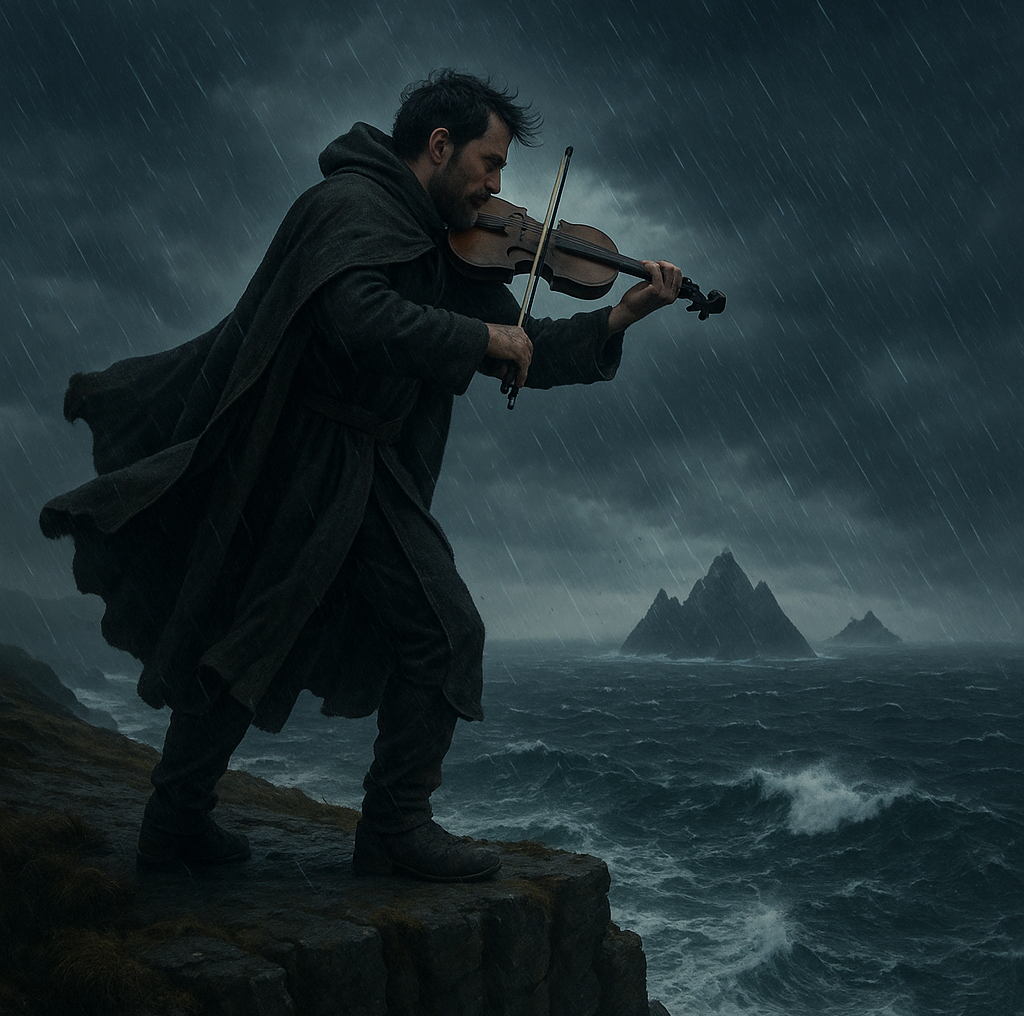
‘Oíche na Gaoithe Móire’ 6th - 7th January 1839
The night of the big wind ‘Oíche na Gaoithe Móire’.
Was the most devastating storm ever recorded in Irish history. The hurricane of 6th and 7th January 1839 made more people homeless in a single night than all the sorry decades of eviction that followed it. The calm before the Big Wind struck was particularly eerie. Most of the eight million people living in Ireland at the time were preparing themselves for Little Christmas, the Feast of the Epiphany.
The 5th had seen the first snowfall of the year; heavy enough for some to build snowmen. By the following day, Sunday morning was unusually warm along the west coast and the air was still. At approximately 3pm, the rain began to fall and the wind picked up. Nobody could possibly have predicted that those first soft raindrops signified an advance assault from the most terrifying hurricane in human memory. By 6pm, the winds had become strong and the raindrops were heavier, with occasional bursts of hail and sleet. From the West an increasingly loud rumble could be heard.
By 10pm, Ireland was in the throes of a ferocious cyclone that would continue unabated until 6am. The hurricane had roared unmolested across 3,000 miles of Atlantic Ocean, gathering momentum every second. It hit Ireland’s west coast with such power that the waves actually broke over the top of the Cliffs of Moher. Reading contemporary accounts, the impression is that if Ireland did not have such magnificent cliffs forming a barrier along our west coast, the entire country would simply have been engulfed by water.
Stories of the events that night were shared by story-tellers up to modern times.
‘The talking Jackdaw’ is one such story told by Matt Joe O’Neill from the Binneas Collection that can be heard here.

Nollaig Shona daoibh go léir
Nollaig Shona daoibh go léir
The Kerry Christmas Carol
(Sigerson Clifford)
Artist: Rosaleen Mullarkey
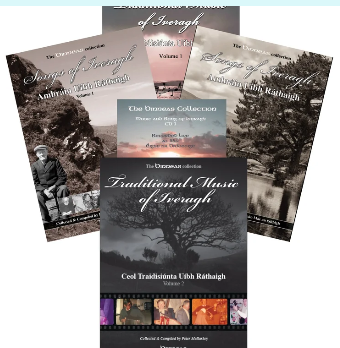
Give the gift of Music & Song this Christmas.
Consider giving the gift of Music & Song this Christmas from the ‘Binneas Collection’.
Visit the Binneas shop - www.binneas.ie/shop
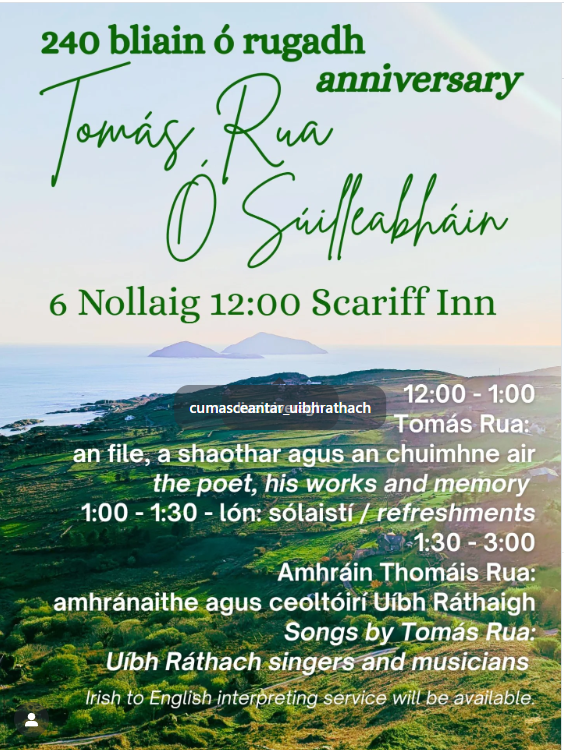

Songs of Tomás Rua Ó Súilleabháin
A new section to the Binneas Website ‘Songs of Tomás Rua Ó Súilleabháin’ to mark the 240th anniversary of his birth.

Bean na Gruaige Buí
De réir an bhéaloidis d’fhuadaigh na síoga triúr dreiféar as móinéar ar an dtaobh thiar de Ghóilín lá breá fómhair. Cuireadh bean acu go ceantar an Daingin, bean eile go Cill Ó gCróin agus an triú bean go Clochán Mhóir atá ar an gcnoc lastuas do Mhálainn i bparóiste na Dromad. Mór a bhí mar ainm uirthi sin is bhíodh sí le feiscint ag Clochán Mhóir agus í síos suas an Caol ina sprid an mheán-lae. Deirtear go raibh folt breá gruaige ar dhath an óir ag sileadh léi. Is léir gurb é an seanchas seo a spreag Dónall Ó Curnáin ó Mhálainn an t-amhrán seo a chumadh. Bhí an fothrach ar a dtugtaí Clochán Mhóir suite ar an gcnoc lastuas dá thigh féin.
According to local tradition Mór was one of three sisters who was carried by the fairies as they were working in a meadow somewhere Over-the-Water. One sister was brought to Dingle, another to Killogrone, while Mór, the third sister was carried off to Málainn in the parish of Dromid. That sister had flowing golden hair and went by the name of Mór. A small stone hut on the mountainside, the ruins of which can still be seen today, is known as Clochán Mhóir. It was claimed that Mór could be seen as a mid-day spirit walking up and down along a nearby mountain stream. This legend inspired Dan Courtney from Malainn, in the composition of this song “Bean na Gruaige Buí.” The ruin of Clochán Mhóir is situated on the mountainside just above the house where Dan resided.

Kenneigh Hall
This song was composed by Molly Coffey in October 1975. It describes the nights at the local Kenneigh dance hall that has long since closed. This song was performed at the concert to mark the conclusion of the digitisation phase supported by the Heritage Council of Ireland. The concert was supported by Kerry County Council.

A fantastic evening of music, song & story from the ‘Binneas Collection’.
A fantastic evening of music, song & story from the ‘Binneas Collection’ to mark the end of the digitisation phase supported by ‘The Heritage Council of Ireland’. The venue was packed and numerous people took part in the performance including a group of school children from Scoil Náisiúnta Chillín Liath who sang ‘The Great German Plane’ & ‘Bó na leath adhairce’.
Click on the Facebook link below.

Binneas Presents an evening of local Music & song from the Binneas Collection at Dromid Community Centre
Saturday 15th November 2025 8.30pm
Binneas Presents an evening of local Music & song from the Binneas Collection at Dromid Community Centre.
The evening will showcase some of the recently digitised material from the Binneas Collection that was supported by the Heritage Council of Ireland grant.
Free admission, Refreshments & Chat afterwards.
All welcome.
This evening is supported by Kerry County Council

Binneas Heritage Project Maps
Binneas have created a series of digital maps to aid people to geographically engage with some of the content in the Binneas Collection. More pins will be added to the maps over time. This project has been supported by ‘The Heritage Council.

Taobh a' Rinin ní shuidhfhidh mé i gcaitheamh mo shaoghal
"Buachaill óg ó Rinin a dhein a' dán seo nuair a bhí a mhuinntear ag chur d'fhiachaibh air
cailin nár thaitin leis a phósadh"
Collected from Muirris Ó Rioghardáin, Baslickane (age 70)
"A young boy from Rinín wrote this song when his people were forcing him to marry a girl he didn't like"

An Exile’s Farewell
This song is part of the Dan Courtney collection. It was sung by one of P. Walsh’s past pupils, as he was about to depart to the U.S.A. It is not known at this time if it is a composition of Courtney’s but it is likely that he had an input in it. The Glen that is referred to is Toorsaleen and Coomaspeara. The reference in verse eight to ‘buying up the news’ refers to the ‘News of the world’ newspaper, a scandalous publication at that time, but in much demand.

Ten more Mikeen McCarthy Interviews uploaded
Ten more Mikeen McCarthy Interviews uploaded to the Binneas website.

The Deluge 1924
Composed by ‘Mick McQuaid’, The Crow’s Nest, Caherciveen.
This was one of the nom de plumes used by Mr D O’Neill of Caherciveen who was a regular contributor in some of the Kerry Newspapers.

The Ballad of Tinker Tom
The ballad of Tinker Tom is a composition of Donal P O’Shea of Cahersavane. A collection of his compositions have recently been digitised for the Binneas Collection and will be available shortly.

Carhan Bridge
This comes from a collection of compositions from Con Barry (Cahersiveen). These compositions have been recently digitised.

Lisbawn Slopes
A recent, new collection of material to the Binneas Collection are the compositions of Patrick Joseph Griffin, Lisbawn.
About Patrick was born on 14 March 1908 in Lisbawn, Cahersiveen, to Timothy Griffin of Gortnagree and his mother Bridget O Sullivan of Lisbawn.. He married Margaret J O'Connell, East End, on 26 July 1934. They had six children during their marriage. He died on 8 April 1987 at the age of 79. Paddy Joe is buried in Holycross Cemetary, Cahersiveen.

Maidhcín na Dranna
Bhí meitheal ag baint mhóna i bparóiste na Priaireachta agus chaith duine acu lasán ar an gcnoc. Bhí an aimsir chomh tirim sin gur las an cnoc go léir. Níor thug an té a chaith an lasán aon chabhair dóibh chun an lasair a mhúchadh. Ní raibh fear na meithle buíoch dó, mar dódh a lán d’acraí an chnoic. Do dhein sé an t-amhrán seo don nduine a las an tine. Máire Ní Mhurchú, a bhí i scoil na gCailíní i mBaile an Sceilg, a bhailigh an t-amhrán ó Phádraig Ó Leidhin, Cúm, sa bhliain 1938.
A meitheal were cutting turf in a bog in the parish of Prior when one of the group carelessly threw away a match. The weather at the time was extremely dry and the whole mountainside caught fire. The man that threw the match didn’t assist the rest of the group as they attempted to bring the fire under control. The head of the meitheal was very annoyed with the man’s behaviour and composed an unflattering song about him. This song was included in the 1938 folklore collection made in Ballinskelligs Girls’ National School. It was collected by Máire Ní Mhurchú from Pádraig Ó Leidhin, Coom.